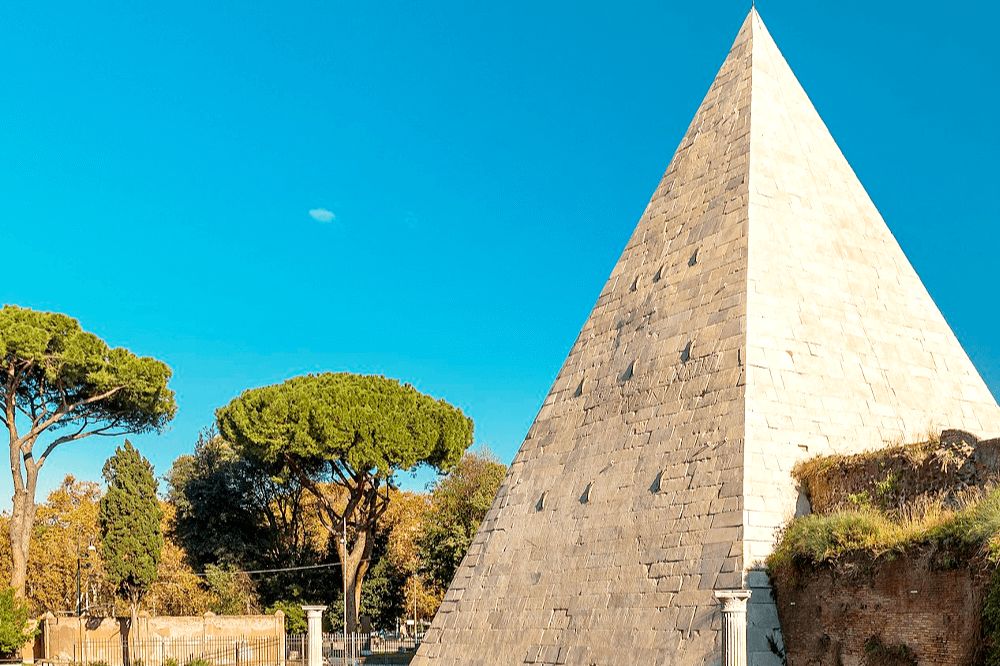
Nachdem Oktavian (der spätere Augustus) 30 v. Chr. nach dem Tod der Kleopatra Ägypten erobert hatte, orientierte sich die römische Grabarchitektur zunehmend an ägyptischen Vorbildern, und pyramidenförmige Grabmäler kamen regelrecht in Mode. Die Cestius-Pyramide, errichtet aus Beton mit einer Verkleidung aus Carrara-Marmorplatten, ist 36,4 Meter hoch und hat eine quadratische Grundfläche von rund 30 Metern Seitenlänge. Sie wurde zwischen 18 und 12 v. Chr. im ägyptischen Stil erbaut, und zwar in nur 330 Tagen. Sie war das Grabmal des Gaius Cestius Epulo, Prätor, Volkstribun und Mitglied der Septemviri Epulonum, eines Priesterkollegiums, wie eine der Inschriften an ihrer Fassade belegt.
After Octavian (later Augustus) conquered Egypt in 30 BC, following the death of Cleopatra, Roman funerary architecture began to draw on Egyptian models, and pyramid-shaped tombs became a genuine fashion. The Pyramid of Cestius, built of concrete faced with slabs of Carrara marble, is 36.4 metres high with a square base of about 30 metres per side. It was built in the Egyptian style between 18 and 12 BC, in just 330 days. It was the tomb of Gaius Cestius Epulo, a praetor, tribune of the plebs and member of the Septemviri Epulonum, a priestly college, as one of the inscriptions on its façade records.